
 GIOCONDO
Menu board signage does more work than most restaurant owners give it credit for. It affects how quickly customers decide, how premium the food feels before it's even ordered, and - critically - how much hassle it is every time a price or dish changes.
Illuminated drive-thru menu boards are built for speed and legibility from a car at a distance, usually backlit for visibility in all weather and light conditions. These make sense for quick-service restaurants and any format where the customer is deciding fast, often from a vehicle. The tradeoff is that changing prices or items typically means reprinting a panel rather than a quick edit, so these suit menus that don't change often.
Wall-mounted magnetic or changeable-letter menu boards solve the update problem directly - staff can swap prices or daily specials in minutes without calling a signage company. These work well for cafes and casual dining spots with menus that shift seasonally or have regular specials, though they read as more casual than a fully custom printed board, which is either exactly right or exactly wrong depending on your restaurant's positioning.
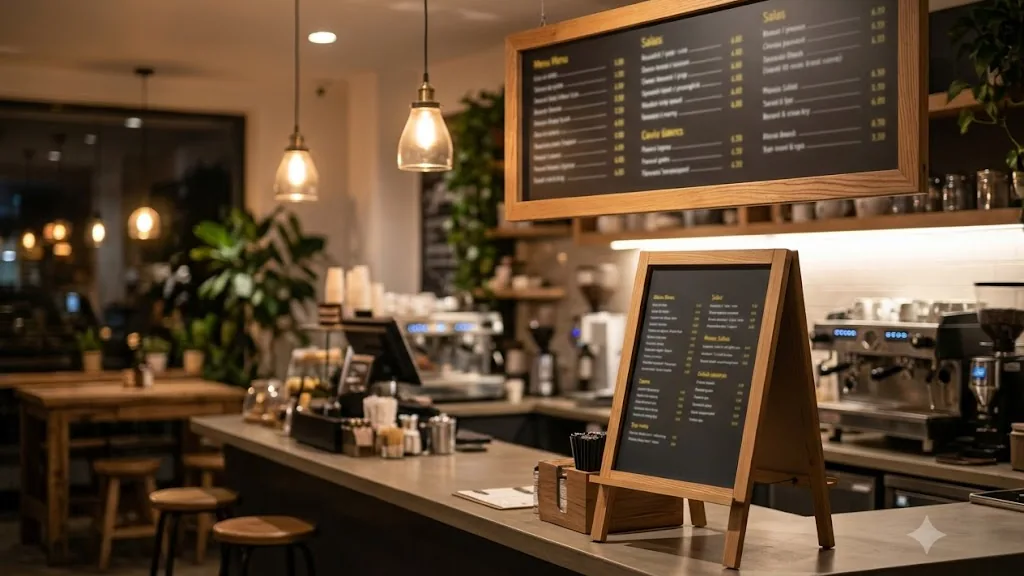
Chalkboard-style A-frame boards, real or digitally printed to look chalkboard-style, signal "specials" and informality effectively and work well placed outside to catch passing foot traffic. They're inexpensive to produce and easy to update, but they're a supplement to your main menu display, not a replacement for it.
Digital menu displays are the highest upfront cost but the lowest cost-per-change over time - once installed, updating a price or swapping a seasonal item is a software update, not a reprint. These make the most sense for restaurants that change pricing or offerings frequently, or multi-location businesses that want every branch showing identical, centrally-updated menus.
The practical question to ask yourself before choosing: how often does your menu actually change? A restaurant with a stable core menu is often better served by a well-produced illuminated or printed board that looks premium and rarely needs touching. A restaurant that runs weekly specials or adjusts pricing seasonally will save more money over two years on a changeable or digital format than it spends on the higher upfront cost.
If you're planning a new menu board or replacing an existing one, sharing your menu's typical size, how often it changes, and whether it's for indoor, outdoor, or drive-thru use gives us enough to recommend the right format rather than defaulting to whatever's most common.