
 GIOCONDO
Safety signage sits in a different category from every other kind of signage a business installs: it's not primarily about branding or aesthetics, it's about legal compliance and, more importantly, about people's safety in an emergency. Getting it wrong isn't just a fine risk, it's a real risk to occupants.
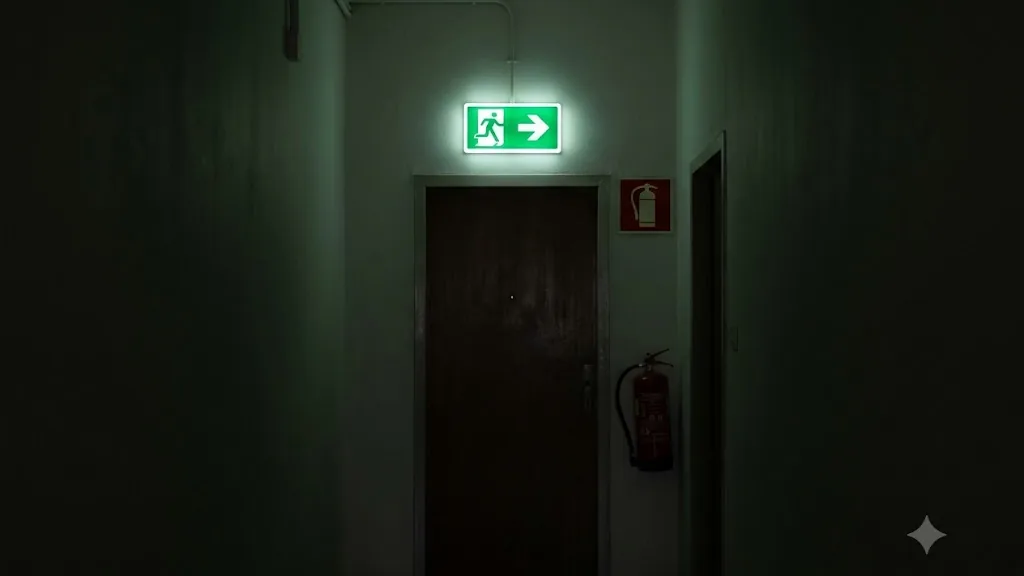
Fire exit signage is the most visible requirement. Every escape route needs clear, illuminated or photoluminescent exit signs positioned so that from any point in the building, the nearest exit sign is visible. Photoluminescent signage - which glows using stored light rather than needing constant power - has become popular because it keeps working during a power cut, which is exactly when clear exit signage matters most.
Fire extinguisher and equipment location signage needs to mark exactly where extinguishers, fire hoses, and alarm points are, using standard recognizable symbols rather than just text, since symbols are understood faster under stress and by visitors who may not read the local language fluently.
Assembly point and evacuation route signage should be posted at key decision points throughout the building, not just near exits - the goal is that someone unfamiliar with the building can follow the signage alone during an evacuation without needing to already know the layout.
Hazard and mandatory PPE signage applies mainly to industrial, warehouse, and construction environments - signs indicating required protective equipment, hazardous material warnings, and restricted access areas. These aren't just good practice, they're typically required wherever the relevant hazard exists, and the specific symbols and wording usually need to follow recognized safety signage standards rather than custom wording.
Maximum occupancy and emergency contact signage rounds out most compliance requirements - occupancy limits displayed in assembly areas and conference rooms, and emergency contact information posted where staff and visitors can find it quickly.
The practical reality for most business owners is that safety signage requirements vary by building type, size, and use, and what's compliant for a small retail shop differs from what's needed in a hospital, school, or factory. If you're setting up safety signage for the first time or aren't certain your existing signage meets current requirements, sharing your building type and floor plan lets us put together a signage list matched to what your specific space actually needs, rather than a generic checklist that may miss or over-specify requirements for your situation.