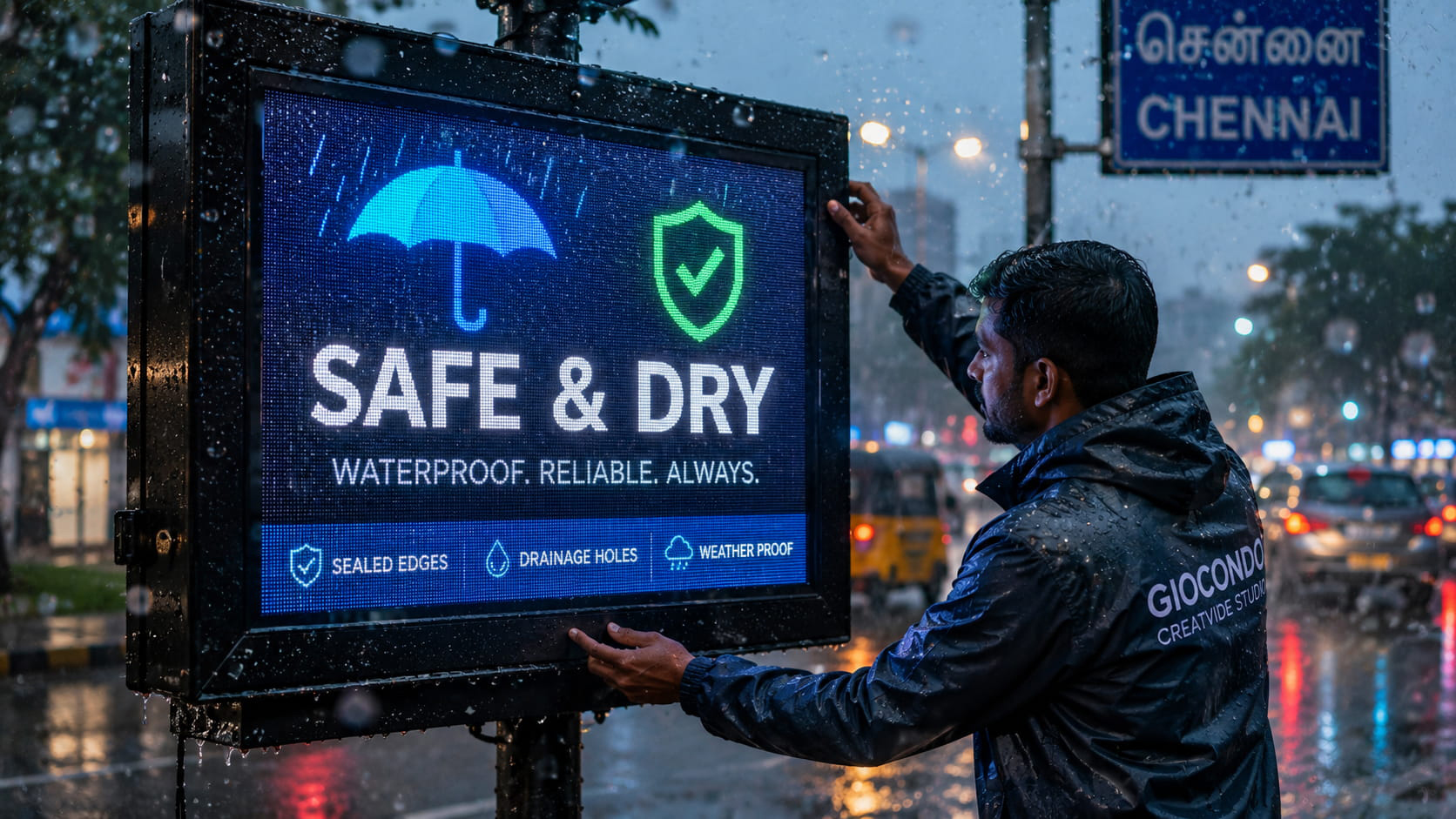
Chennai's monsoon season brings heavy rainfall, high humidity, and water ingress risks that can damage outdoor signage. From LED displays to metal letters and acrylic signs, proper pre-monsoon maintenance is essential to prevent electrical shorts, corrosion, and costly downtime.
1. Pre-Monsoon Waterproofing & Seal Integrity
Before the first downpour, inspect all rubber gaskets and door seals for micro-cracks or dry rot. Replace any degraded materials immediately. Check silicone seals around letters and power supply boxes—if you see any gaps or hardened sealant, reapply high-quality weatherproof silicone.
Ensure that drainage channels and weep holes are clear of dust and debris. Blocked drainage can cause rainwater to pool inside enclosures, leading to component failure and corrosion. For outdoor LED signage, verify that the enclosure meets IP65 rating or higher, ensuring complete protection against dust ingress and low-pressure water jets.
2. Electrical Safety & GFCI Testing
Water and electricity are a dangerous combination. Test all Ground Fault Circuit Interrupter (GFCI) outlets powering your signage to ensure they are fully functional—these protect against electrical fires in the event of a water breach.
Check cable glands at entry points for power and data cables—they should be tightly sealed with weatherproof silicone or specialized cable glands. Replace desiccants (silica gel packs) inside enclosures to absorb trapped ambient moisture and prevent screen fogging.
3. Structural Inspection for High Winds
Monsoon winds can loosen fixings and brackets. Inspect all mounting hardware, bolts, and structural supports for signs. If a sign visibly oscillates in windy weather, add wind dampers or upgrade to a double-pole, double-sided frame. Brackets rated to handle strong winds are inexpensive compared with cleaning signage out of traffic lanes after a storm.
Check for any peeling edges, loose screws, or cracks in sign panels that could allow water entry. Prompt repairs prevent small issues from escalating into costly replacements.
4. Cleaning & Visibility Preparation
Signboards are often obliterated during rains and become difficult to follow because of overcast skies. Clean exterior surfaces using mild detergent and a soft cloth or sponge—avoid abrasive brushes that can scratch protective coatings. Rinse thoroughly and dry gently to prevent water spots.
For illuminated signs, ensure all LED modules are functioning at full brightness. Neon signs and lights at construction sites or hazardous areas must be bright and bold to remain visible during heavy downpours. Conduct visibility tests before the season begins.
5. Post-Rain Inspection & Professional Support
After heavy rainfall, conduct a post-rain inspection: check for any signs of water ingress inside enclosures, test electrical components for proper operation, and inspect for any loosening of structural fixings.
Establish a preventative maintenance schedule with routine inspections and professional cleaning every 3–6 months. For multi-site operations, a planned maintenance approach helps extend the life of signage and avoid costly, last-minute replacements. Professional support can include scheduled inspections to identify wear and damage early, professional cleaning to restore clarity, and repairs to fixings, panels, and finishes.

Written by Giocondo Creative Studio
With 15+ years of signage engineering experience in Chennai, our team shares industry insights to help you protect your signage investment through every season.
Schedule Pre-Monsoon Inspection →