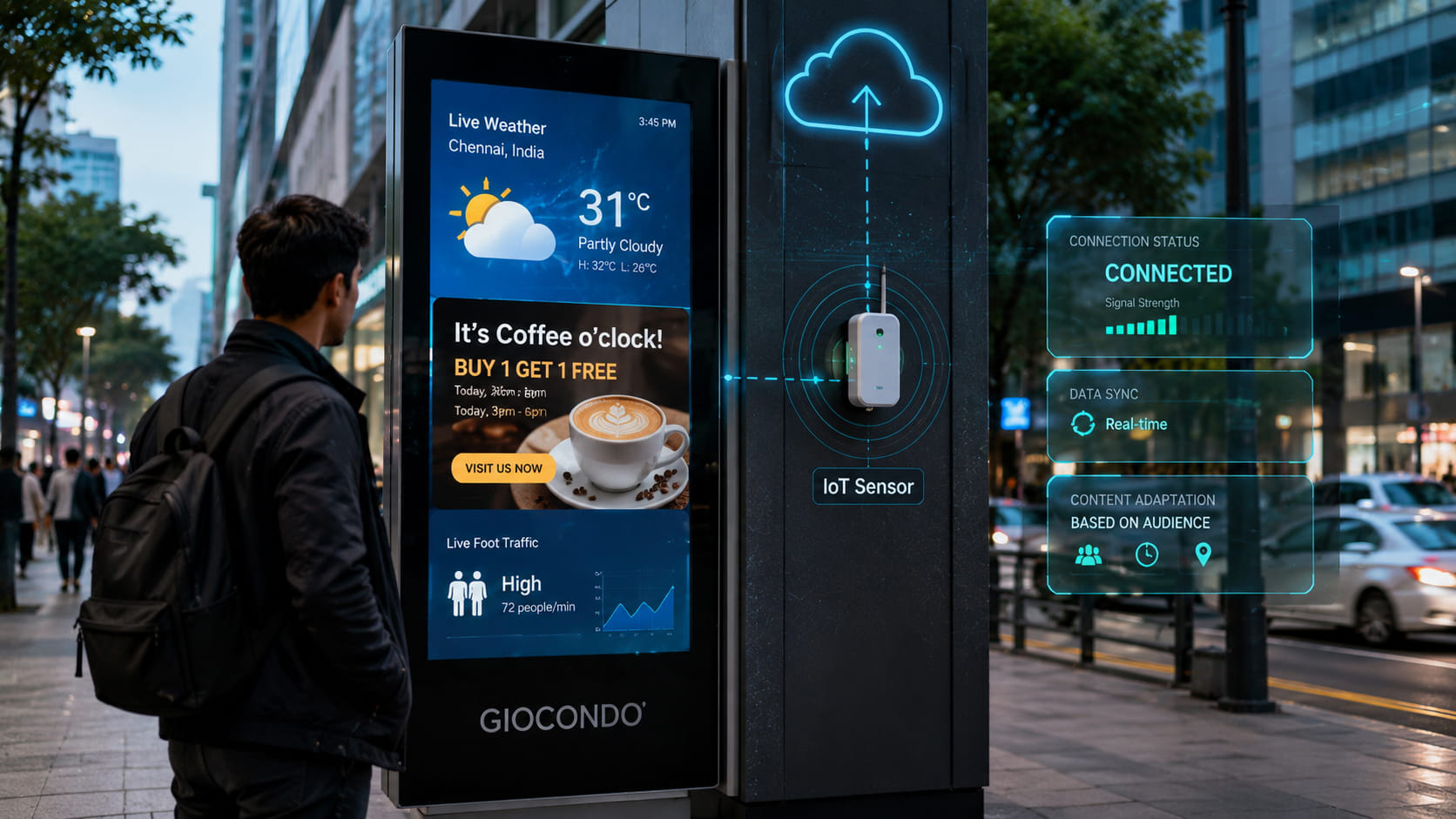
"Smart signage" is no longer futuristic jargon—it's becoming a standard expectation in retail, corporate, healthcare, and hospitality environments. IoT-enabled signage networks are transforming how brands communicate, offering real-time updates, predictive maintenance, and data-driven personalization.
1. Cloud-Connected Signage Networks & Real-Time Updates
Retail chains, gyms, campuses, and hospitality brands are rapidly adopting cloud-connected signage networks, enabling everything from remote content updates to automated maintenance alerts. Displays are reacting to weather conditions, foot traffic, and time of day, delivering content that's situationally relevant.
The global digital signage market, valued at USD 27.66 billion in 2025, is projected to reach USD 44.6 billion by 2031, growing at a CAGR of 8.28%. IoT devices are driving much of this growth, enabling businesses to transform static displays into responsive communication channels.
2. Sensor-Driven Content Personalization
IoT sensors transform passive screens into responsive communication channels through integrated sensor networks. Foot traffic sensors detect customer movement patterns and trigger content changes automatically. When people gather near specific areas, displays immediately showcase relevant promotions.
Temperature and weather sensors add another layer of responsiveness. During sudden rainfall, outdoor displays switch to umbrella and raincoat promotions. Indoor screens highlight hot beverages when temperatures drop, creating contextually relevant messaging that resonates with customers' immediate needs.
3. AI-Powered Content Management & Automation
AI-assisted content engines are making it easier to create dynamic, personalized playlists that adapt to audience demographics, time of day, and environmental conditions. Predictive maintenance tools help operators anticipate failures before they occur, reducing downtime and repair costs.
The digital signage market is experiencing consistent expansion, with projections indicating growth to USD 35.94 billion by 2026. Indian markets mirror global trends with increased adoption in retail, hospitality, and transportation sectors.
4. Low-Power & Sustainable Display Technology
With ESG and sustainability becoming top priorities, organizations are becoming aware of the hidden costs of traditional digital displays: high energy consumption, waste, and operational inefficiency. New e-paper solutions combine sustainable display technology with long-range, low-power connectivity, delivering next-generation digital signage that reduces energy consumption and optimizes operations.
5. Edge Computing & Reduced Latency
IoT signage operates through three core components: edge devices, connectivity infrastructure, and content management platforms. Edge devices include sensors, processors, and media players that handle local data processing, reducing latency by making decisions without cloud communication for every update. Content management systems aggregate data from multiple IoT devices and orchestrate display updates, processing thousands of sensor inputs simultaneously while maintaining sub-second response times.

Written by Giocondo Creative Studio
With 15+ years of signage engineering experience in Chennai, our team shares industry insights to help you make informed decisions about smart signage technology.
Explore Smart Signage Solutions →