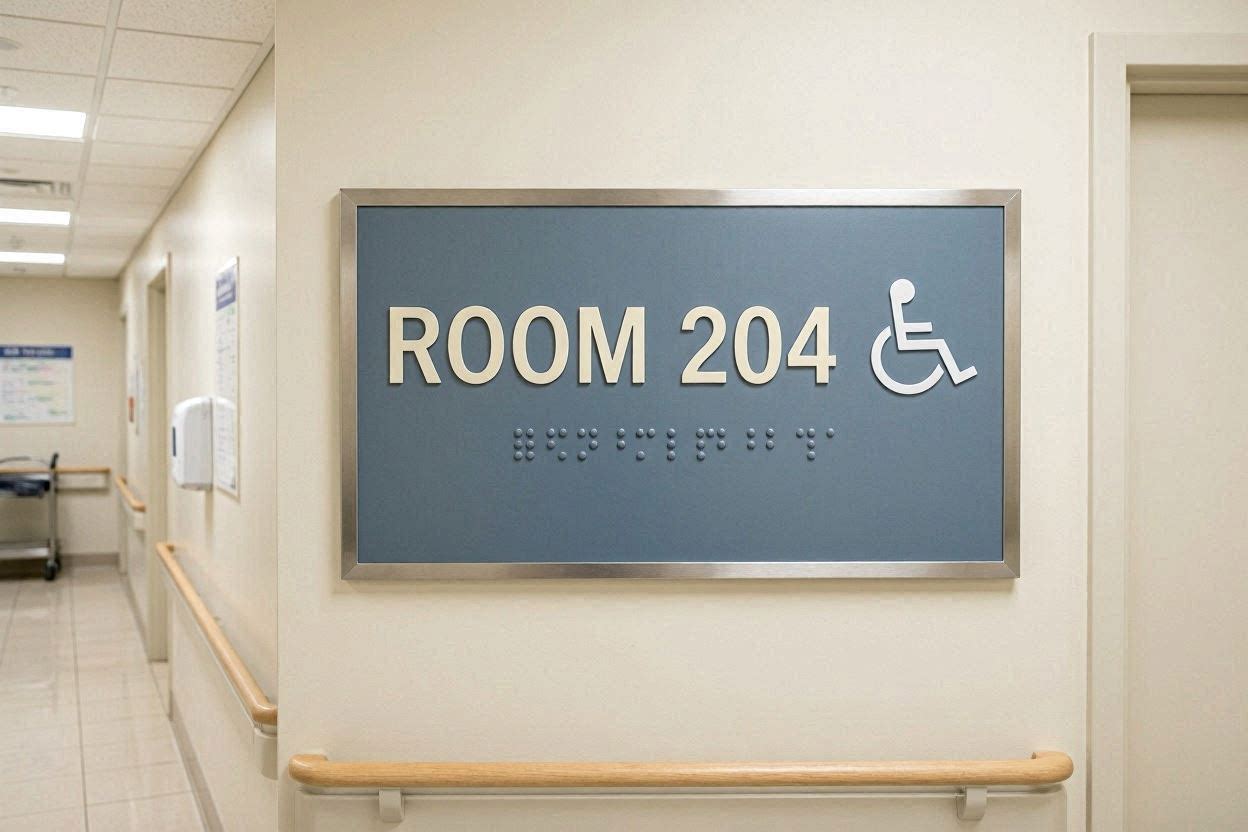
In India, accessibility standards for signage are still evolving, but progressive hospitals are adopting international norms like the Americans with Disabilities Act (ADA) to serve all patients with dignity. Here's why it matters and how to implement it cost‑effectively.
Braille & Tactile Letters – For the Visually Impaired
ADA guidelines require raised tactile letters and Grade 2 Braille on permanent room signs (e.g., patient rooms, restrooms, department doors). This allows visually impaired patients and visitors to navigate independently, reducing stress and reliance on staff.
High‑Contrast & Non‑Glare Finishes
Signs must have a non‑glare finish and high contrast between text and background (e.g., dark text on light background or white text on dark background). This benefits the elderly and those with low vision.
Pictograms & International Symbols
Universal symbols (e.g., a wheelchair for accessible restrooms, a phone for information) help overcome language barriers and cognitive difficulties. These are especially useful in multi‑cultural cities like Chennai.
Mounting Height & Location
ADA specifies that room signs be mounted on the latch side of the door, between 48 and 60 inches from the floor. This allows easy reading for wheelchair users and those standing.
Cost‑Effective Implementation
You don't need to retrofit everything at once. Start with critical areas: patient rooms, restrooms, elevators, and main department entrances. Acrylic with applied Braille is affordable and durable. For a hospital with 100 rooms, the added cost is minimal compared to the benefit.
Conclusion
Adopting accessibility signage is a mark of quality and inclusivity. Giocondo can help you create ADA‑inspired signs that align with Indian regulations and international best practices.
Make Your Hospital More Accessible
Request a free audit of your current signage and a proposal for accessibility upgrades.
Schedule an Audit →
Written by Giocondo Creative Studio
We design signage that serves everyone – with expertise in accessibility standards.
Learn More →